The Fraser River Estuary is one of the most ecologically important landscapes in British Columbia. Stretching across the Lower Mainland where freshwater meets the Salish Sea, the estuary supports millions of juvenile salmon as they transition from river systems to the ocean. It also provides critical habitat for migratory birds, aquatic species, and coastal wildlife. Yet after more than a century of industrial development, dredging, dyking, and shoreline modification, much of this once-connected ecosystem has been fragmented or lost.
Since 2018, a major collaborative effort led by Raincoast Conservation Foundation and Ducks Unlimited Canada has been working to reverse that trend through the Restore Fraser River Estuary Salmon Habitat (ReFRESH) project — a large-scale initiative focused on restoring connectivity, rebuilding marsh habitat, and improving conditions for juvenile salmon in the Fraser Estuary. The project also includes contributions from the Lower Fraser Fisheries Alliance and Asarum Ecological Consulting, with support from Fisheries and Oceans Canada and the Province of British Columbia through the BC Salmon Restoration and Innovation Fund.
At the core of the project is a simple but critical goal: reconnect salmon to the habitats they evolved to use.
Over decades, infrastructure such as jetties, training walls, causeways, and compensation marshes altered the estuary’s natural flow of water and sediment. Many shallow tidal marshes — essential feeding and rearing habitat for juvenile Chinook, chum, and pink salmon — became inaccessible or ecologically degraded. In some areas, invasive vegetation replaced native marsh plants, reducing habitat quality and disrupting natural tidal exchange.
Raincoast’s earlier restoration work demonstrated how impactful reconnecting habitat can be. Since 2019, breaches constructed in the Steveston and North Arm jetties have allowed juvenile salmon to access Sturgeon Bank marshes for the first time in generations. Monitoring has shown immediate success, including high rates of juvenile Chinook and chum salmon movement through the restored openings. Researchers observed peak passage rates of more than 700 juvenile chum salmon per hour during seasonal migrations.
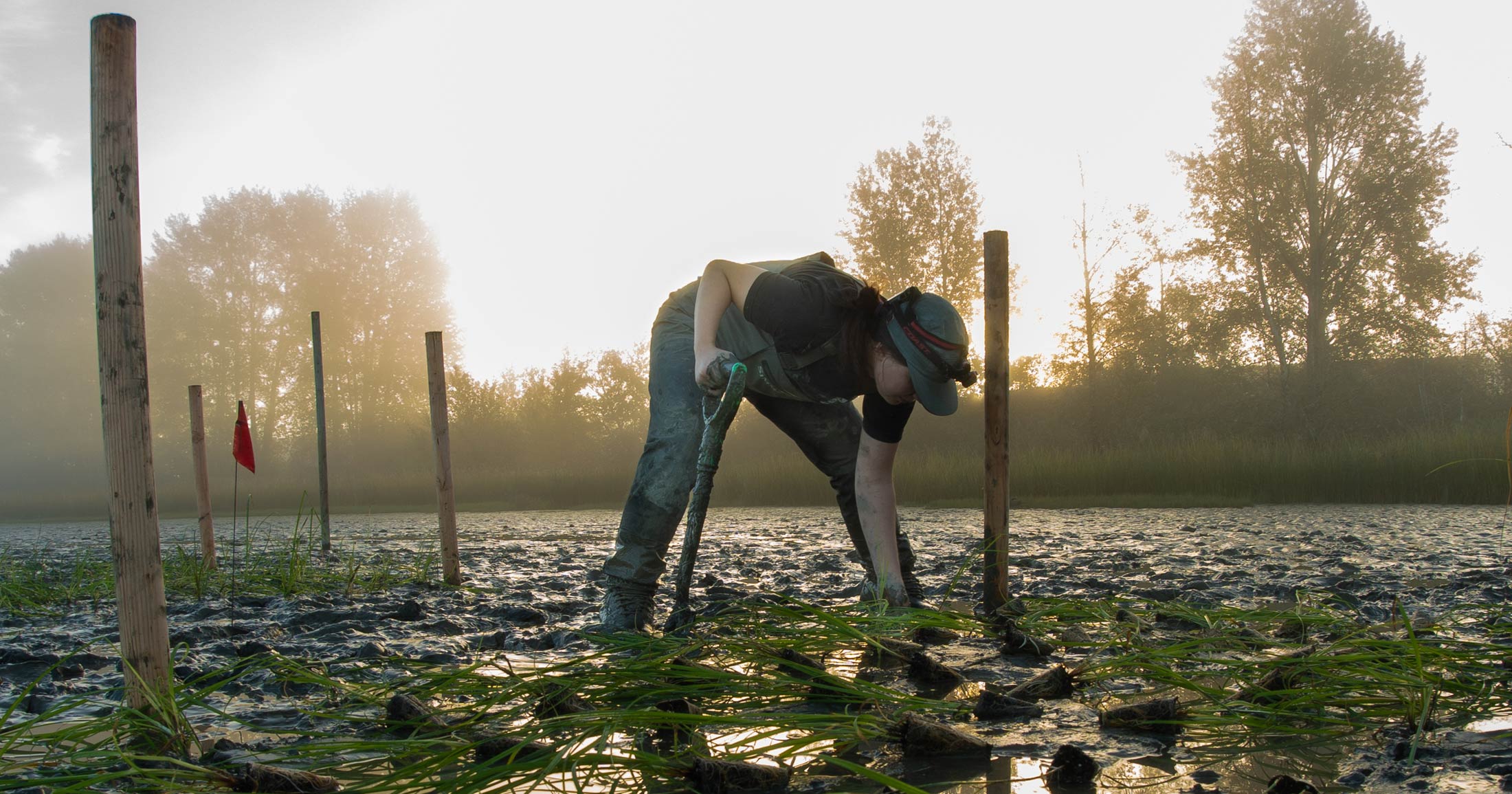
Building on that momentum, the ReFRESH project is now targeting degraded marsh systems throughout the Lower Fraser Estuary, including Woods Island Marsh. Created as habitat compensation associated with development near Vancouver International Airport, the marsh was intended to support native sedge communities and juvenile salmon. Over time, however, the site became dominated by invasive hybrid cattail, while deteriorating infrastructure and blocked tidal channels reduced water flow and fish access.
Restoration efforts at Woods Island Marsh are focused on re-establishing ecological function. Crews are removing invasive vegetation, restoring tidal channels, improving drainage, and replacing failing debris barriers with more fish-friendly structures that maintain water movement while still managing debris accumulation. Additional channels are also being created to improve marsh inundation and increase habitat access for salmon and other aquatic species.
The project represents more than habitat restoration alone. It is part of a broader vision for long-term estuary resilience, one that recognizes salmon as both a keystone species and an indicator of watershed health. Healthy estuaries support biodiversity, strengthen food webs, improve climate resilience, and sustain cultural and economic values tied to Pacific salmon.
Equally important is the collaborative model behind the initiative. Scientists, Indigenous organizations, conservation groups, and government agencies are working together to combine research, monitoring, and on-the-ground restoration. The partnership reflects a growing understanding that recovering salmon populations requires coordinated, landscape-scale action across the Fraser watershed.
As restoration progresses, the Fraser Estuary project is becoming a leading example of how degraded coastal ecosystems can be rehabilitated through science-driven collaboration. By restoring marsh connectivity and improving habitat quality, the initiative is helping rebuild one of British Columbia’s most important ecological corridors — ensuring future generations of salmon, wildlife, and coastal communities continue to benefit from a healthier Fraser River Estuary.